

5 Steps How to Streamline Field Service Processes and Boost Team Productivity (Easy Guide for Contractors)
- Kim S
- Oct 8, 2025
- 6 min read

Updated: Oct 9, 2025
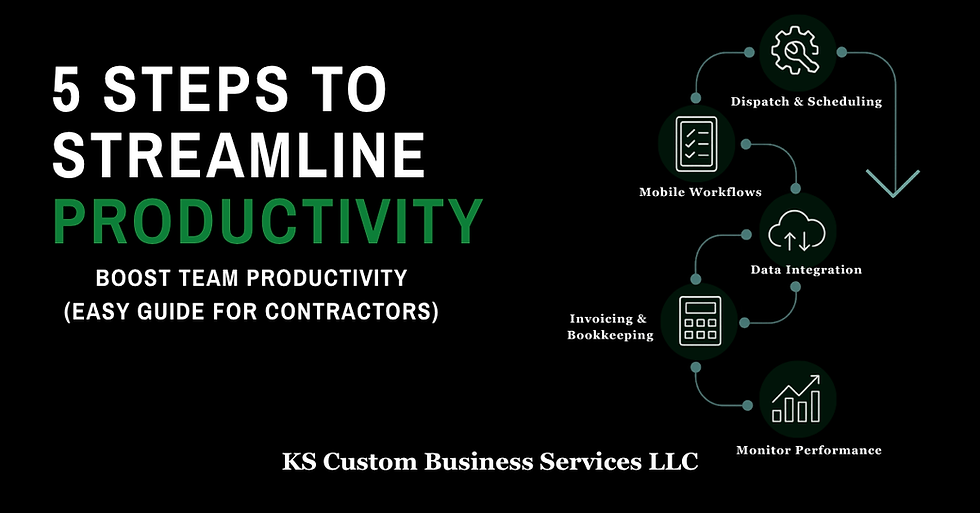
Running a successful contracting business means juggling multiple moving parts: from scheduling technicians and managing inventory to keeping customers happy and maintaining profitability. If you're feeling overwhelmed by inefficient processes that seem to eat up time and drain productivity, you're not alone. Many contractors struggle with outdated systems that create bottlenecks, increase costs, and leave money on the table.
The good news? Streamlining your field service operations doesn't have to be complicated or expensive. We've helped countless contractors transform their businesses by implementing proven strategies that boost productivity while reducing stress. Here are five practical steps that will help you create a more efficient, profitable operation.
Step 1: Automate Your Workflow and Task Management
The biggest productivity killer in field service operations is manual, repetitive administrative work. When your team spends hours each day on paperwork, phone calls, and data entry, that's time they're not spending on billable work or growing your business.
Modern field service management software eliminates these time drains by automating routine tasks like appointment reminders, follow-up emails, and scheduling processes. Instead of playing phone tag with customers or manually updating spreadsheets, your system handles these tasks automatically while you focus on what matters most.

Think about how much time your office staff currently spends coordinating between field technicians and customers. With workflow automation, all of this information flows seamlessly through one centralized platform. Your technicians get automatic notifications about schedule changes, customers receive timely updates, and you get real-time visibility into every job's status.
The key is choosing automation tools that integrate with your existing processes rather than forcing you to completely overhaul your operations. Start with the most time-consuming administrative tasks: usually scheduling and customer communication: and expand from there.
When implemented correctly, workflow automation typically saves contractors 2-3 hours per day of administrative time. That's equivalent to adding an extra part-time employee without the additional payroll costs.
Step 2: Optimize Your Scheduling and Dispatching
Poor scheduling is one of the fastest ways to kill productivity and frustrate both customers and technicians. When jobs are assigned randomly or based on incomplete information, you end up with technicians driving across town unnecessarily, arriving at jobs they're not qualified to handle, or showing up without the right equipment.
Smart scheduling and dispatching systems solve these problems by considering multiple factors simultaneously: technician availability, location proximity, skill sets, and current workload. This isn't just about making your day look organized on paper: it's about maximizing billable hours while minimizing travel time and fuel costs.
Route optimization technology takes this a step further by analyzing traffic patterns, job complexity, and geographical clusters to create the most efficient daily routes for each technician. The result? Your team can handle more service calls per day while reducing stress and vehicle wear.

Real-time dispatching capabilities also allow you to respond quickly when priorities change. If an emergency call comes in or a job gets cancelled, your system can automatically reassign work to minimize disruption and maintain productivity.
We've seen contractors increase their daily service capacity by 20-30% simply by implementing intelligent scheduling systems. The best part is that technicians actually prefer working with optimized schedules because it reduces their drive time and allows them to focus on the technical work they enjoy.
Step 3: Equip Your Field Teams with Mobile Technology
Your field technicians are your most valuable assets, but they can't be productive if they're constantly waiting for information or driving back to the office for paperwork. Mobile technology transforms how field work gets done by putting everything your technicians need right in their hands.
Modern mobile apps provide real-time access to work orders, customer histories, equipment manuals, and troubleshooting guides. When a technician arrives at a job site, they immediately have all the context they need to diagnose problems quickly and communicate effectively with customers.
The communication benefits alone make mobile technology worthwhile. Instead of playing phone tag between the office and field, technicians can instantly share photos, update job status, and request additional resources. This eliminates delays and reduces the number of incomplete jobs that require follow-up visits.
Mobile invoicing and payment processing capabilities also speed up the entire service cycle. Technicians can generate professional invoices on-site, collect payments immediately, and update your financial records in real-time. This improves cash flow and reduces the administrative burden on your office staff.
Cloud-based documentation ensures that everyone stays synchronized. When a technician updates a work order or completes a service report, that information is immediately available to your entire team. No more lost paperwork or miscommunication about job status.
Step 4: Implement Real-Time Inventory Management
Nothing kills productivity faster than a technician arriving at a job site without the right parts. Not only does this create delays and require additional trips, but it also damages your professional reputation and costs you money in wasted time and fuel.
Effective inventory management goes beyond just knowing what you have in stock. Modern systems provide real-time visibility into inventory levels across multiple locations, track which technicians have which parts, and automatically alert you when supplies are running low.

IoT technology and barcode scanning eliminate manual data entry errors while providing accurate, up-to-date inventory information. Your technicians can quickly check part availability, reserve items for specific jobs, and even order replacement stock directly from the field.
Smart inventory systems also analyze usage patterns to help you optimize stock levels. Instead of tying up cash in slow-moving parts or running out of frequently needed items, you maintain the right balance of inventory to support your operations efficiently.
Mobile inventory management allows technicians to confirm part availability before leaving for jobs and update stock levels in real-time. This coordination between field operations and inventory management dramatically improves first-time fix rates and customer satisfaction.
The financial impact of effective inventory management extends beyond productivity. By reducing emergency parts orders, minimizing stock-outs, and optimizing inventory levels, most contractors see a 10-15% reduction in parts costs within the first year.
Step 5: Monitor Performance and Invest in Continuous Training
You can't improve what you don't measure. Tracking key performance indicators like response times, first-time fix rates, and job completion times provides valuable insights into where your operations excel and where improvements are needed.
Modern field service management systems make performance monitoring simple by automatically tracking metrics and generating easy-to-understand reports. You can identify patterns, spot bottlenecks, and make data-driven decisions about resource allocation and process improvements.

However, technology alone won't solve productivity challenges if your team lacks the skills to use it effectively. Continuous training ensures that your technicians stay current with industry best practices, new equipment, and evolving customer expectations.
Well-trained technicians diagnose problems faster, complete jobs more efficiently, and provide better customer service. This translates directly into higher productivity, fewer callbacks, and increased customer satisfaction. The investment in training pays for itself through improved efficiency and reduced rework.
Time management training specifically helps field service technicians prioritize tasks, meet deadlines consistently, and handle unexpected challenges without losing productivity. When your team understands how to work efficiently, they can accomplish more while maintaining quality standards.
Regular performance reviews and skill assessments help identify individual training needs and career development opportunities. This not only improves productivity but also increases employee satisfaction and retention.
Bringing It All Together
Streamlining field service operations isn't about implementing every new technology or completely overhauling your processes overnight. It's about making strategic improvements that address your biggest productivity challenges while building on your existing strengths.
Start with the area that causes you the most frustration: whether that's scheduling conflicts, inventory shortages, or communication breakdowns. Implement solutions gradually, train your team thoroughly, and measure the results. As you see improvements in one area, you'll have the confidence and resources to tackle the next challenge.
Remember that productivity improvements often have a compound effect. Better scheduling reduces travel time, which allows technicians to complete more jobs, which improves cash flow, which provides resources for additional improvements. Each step builds on the others to create significant long-term benefits.
The contractors who thrive in today's competitive market are those who embrace efficiency without sacrificing quality. By following these five steps, you'll create a more productive, profitable operation that serves customers better while reducing stress for your entire team.
Ready to take the next step in streamlining your field service operations? We'd love to help you identify opportunities for improvement and develop a plan that fits your specific needs. Contact us to discuss how we can support your business growth through better financial management and operational efficiency.


Comments