

When we talk to business owners about their finances, one of the biggest challenges we hear is this: “I can’t tell which parts of my business are actually making money.” If you’ve ever felt this way, you’re not alone. Many contractors and small business owners struggle with getting a clear picture of their financial performance because they’re looking at their books as one big, messy pile of numbers.
That’s where departmentalization comes in. Think of it as organizing your financial records the same way you’d organize your toolbox – everything has its place, and you can find exactly what you need when you need it.
What Is Departmentalization in Bookkeeping?
Departmentalization in bookkeeping means breaking down your financial records by different areas of your business. Instead of lumping all your income and expenses together, you track them separately for each department, service line, or business unit.
For example, if you’re an HVAC contractor, you might separate your books into:
- Residential installation
- Commercial maintenance
- Emergency repair services
- Equipment sales
This approach transforms your financial statements from a confusing jumble of numbers into a clear roadmap that shows exactly how each part of your business performs.

The Financial Clarity You’ve Been Missing
We’ve worked with dozens of businesses over the years, and the transformation we see when owners implement departmental bookkeeping is remarkable. Suddenly, they can answer questions that used to keep them up at night:
- Which services generate the highest profit margins?
- Where are we spending too much on overhead?
- Should we expand this department or scale back that one?
- Why did our overall profits drop last quarter?
Breaking Down the Benefits
Enhanced Decision-Making Power
When your books are departmentalized, you’re no longer making gut decisions about your business. You have concrete data showing you which services are your money-makers and which ones are dragging you down. This clarity helps you make smarter choices about where to invest your time, energy, and resources.
Improved Cost Control
Departmental bookkeeping reveals hidden costs that might be eating into your profits. Maybe your commercial division looks profitable until you realize it’s consuming a disproportionate amount of your administrative overhead. With departmental tracking, you can allocate costs accurately and identify areas where you need to tighten your belt.

Better Customer Pricing
Understanding the true cost of delivering each service helps you price more competitively and profitably. When you know exactly how much it costs to complete a residential installation versus a commercial maintenance contract, you can set prices that ensure healthy margins across all your service lines.
Streamlined Tax Planning
Come tax time, departmentalized books make your accountant’s job easier and potentially save you money. You’ll have clear documentation for business deductions, and you can easily identify tax planning opportunities specific to different parts of your business.
How to Implement Departmental Bookkeeping
Start with Your Revenue Streams
Begin by identifying the main ways your business generates income. Most contractors have 3-5 primary service areas. Don’t overcomplicate it initially – you can always add more departments later as your system develops.
Allocate Your Expenses Strategically
Some expenses are easy to assign directly to departments – materials for specific jobs, dedicated equipment, or department-specific labor costs. Others, like office rent or administrative salaries, need to be allocated based on reasonable criteria such as revenue percentage or time spent on each department.
Set Up Your Chart of Accounts
Work with your bookkeeper to restructure your chart of accounts to accommodate departmental tracking. Modern accounting software makes this easier than ever, allowing you to tag transactions with department codes automatically.

Establish Consistent Processes
The key to successful departmental bookkeeping is consistency. Every transaction needs to be properly categorized from day one. This is where having a professional bookkeeping service becomes invaluable – we ensure that every entry is coded correctly and consistently.
Common Mistakes to Avoid
We’ve seen businesses stumble when implementing departmental bookkeeping, usually because they try to do too much too fast. Here are the pitfalls to watch out for:
Over-Departmentalizing
Starting with too many departments creates confusion and makes the system difficult to maintain. Begin with broad categories and refine them as you get comfortable with the process.
Inconsistent Allocation Methods
Changing how you allocate shared expenses from month to month makes your reports unreliable. Establish clear allocation rules and stick to them.
Neglecting Regular Review
Departmental reports are only valuable if you actually use them. Schedule monthly reviews to analyze your departmental performance and adjust your business strategy accordingly.
The Technology Advantage
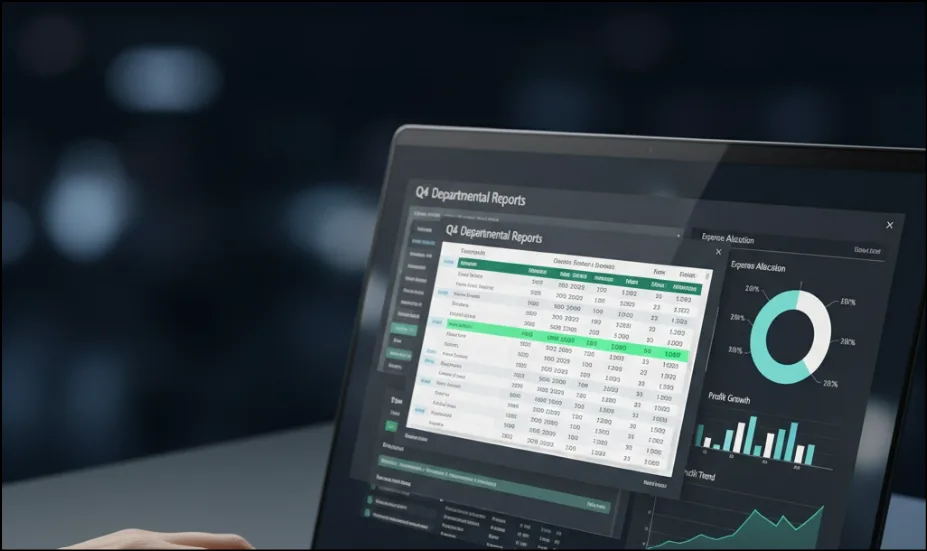
Modern bookkeeping software has made departmental tracking more accessible than ever. Cloud-based systems allow you to generate departmental reports instantly, giving you real-time insights into your business performance. However, the software is only as good as the person using it. That’s why many smart business owners choose to work with professional bookkeeping services who understand both the technology and the strategic implications of departmental reporting.
Making It Work for Your Business
The beauty of departmental bookkeeping is that it adapts to your business model. Whether you’re a multi-trade contractor juggling plumbing, electrical, and HVAC work, or a specialized service provider with different tiers of service, departmentalization helps you understand what’s really happening in your business.
We help our clients implement departmental bookkeeping systems that fit their specific needs and workflows. The goal isn’t to create the most complex system possible – it’s to create the most useful one for your decision-making process.
Real Results from Real Businesses
One of our clients, an electrical contractor, was considering dropping his generator installation service because his overall margins seemed too thin. After implementing departmental bookkeeping, he discovered that generator installations were actually his most profitable service line. The problem was that his residential rewiring jobs were unprofitable and dragging down his overall numbers. He restructured his pricing for rewiring work and saw his total business profitability increase by 28%.
Another client used departmental reporting to identify that her commercial cleaning contracts were barely breaking even once all costs were properly allocated. She renegotiated several contracts and declined to renew others, focusing instead on her highly profitable residential services. Her revenue dropped slightly, but her take-home profit nearly doubled.
Taking the Next Step
If you’re ready to gain real clarity about your business finances, departmental bookkeeping might be the missing piece you’ve been looking for. The process starts with a clear understanding of your business model and revenue streams, followed by a systematic approach to organizing your financial records.
At KS Custom Business Services, we specialize in helping contractors and small business owners implement departmental bookkeeping systems that provide actionable insights without overwhelming complexity. We handle the technical setup and ongoing maintenance so you can focus on using the insights to grow your business.
Want to see how departmental bookkeeping could transform your business? Let’s discuss your specific situation and explore how breaking down your books can build up your bottom line.